My Story Through America’s Turning Points

By Samuel C. Harrell

I Am Samuel C. Harrell

I was born in Gatesville, North Carolina, and raised in Philadelphia, Pennsylvania, during a time when America looked prosperous on the outside. Still, the truth was far more complicated for people who looked like me. The 1950s were sold as the golden age—new neighborhoods, new cars, families growing under the glow of post-war optimism. But that wasn’t the world I knew.

Every summer, my parents sent us children back to Corapeake, North Carolina, the place where they grew up and where our roots ran deep. Corapeake was a world of cotton fields, red clay, heat that settled into your bones, and elders who expected every child to work hard, respect the land, and honor the family. I was around ten years old when I first stepped into those cotton fields.

That work shaped me. Long before I knew anything about economics or entrepreneurship, I learned discipline, responsibility, and the quiet pride of doing a job well—even when no one praises you for it. Looking back, the political climate around me—segregation, the slow rumble of the Civil Rights Movement—was the backdrop of those early lessons. I didn’t understand it then, but I was living inside a nation divided by race yet moving, inch by inch, toward change.



Growing Up in a Nation Fighting for Its Soul

joseph-chan-Q-730ajUcQ-unsplash

By the time the 1960s arrived, the entire country seemed to be waking up. The Civil Rights Movement grew louder. Marches, sit-ins, boycotts—men and women standing up to forces that once felt immovable.

At the same time, I was coming of age in Philadelphia, taking on the kinds of jobs that quietly shape young men:

  • Delivering newspapers in the early morning darkness

  • Selling jewelry behind a counter, learning how to speak to customers

  • Washing dishes in restaurants

  • Stocking warehouses

Back then, I didn’t think of these as “career steps.” They were simply ways to earn a little money and contribute to the household. But in hindsight, they taught me how businesses operate from the ground up. They taught me how to listen, how to observe, how to solve problems, and how to show up consistently even when no one is watching.

Meanwhile, America was changing. The Civil Rights Act of 1964 and the Voting Rights Act of 1965 rewrote the rules—at least on paper. Music, fashion, social norms, and expectations for young people were shifting everywhere. Across the country, individuals were finding their voices; and in my own way, I was finding mine.

Entering a World of Systems, Precision, and Possibilities

spacex-uj3hvdfQujI-unsplash2

The 1970s brought a very different America. Inflation was high, the Vietnam War ended, Watergate created distrust in government, and gas lines stretched for blocks. But it was also a decade where technology and systems engineering began to reshape industries.

That’s the world I stepped into professionally.

I found myself working in aerospace, defense, and engineering, where precision mattered—not just in machines, but in thinking. These were environments where a small miscalculation could derail a major project. I learned structure, systems, accountability, quality control, and leadership. And I began to recognize something important:
I was good at solving complex problems.

These experiences planted seeds that would grow in ways I couldn’t foresee at the time. They became the foundation for:

  • Starting Flx-i-Clean, Inc. with just $1,500

  • Growing it to more than $1.5 million a year

  • Selling the company and diving into technology, online learning, and digital ecosystems

  • Building platforms that connected people, opportunities, and resources

Even then, before the internet became part of everyday life, I understood what technology could do:
it could level the playing field.


How My Journey Became the Blueprint for HonuaTree

SamsCareerCluster

When I look back at my life, I can see how each decade taught me something essential:

1950s — Roots

A work ethic born in cotton fields and shaped by community.

1960s — Growth

Exposure to business, responsibility, and the early stirrings of my entrepreneurial instincts.

1970s — Transformation

Technical training, professional discipline, and the realization that I could build systems of my own.

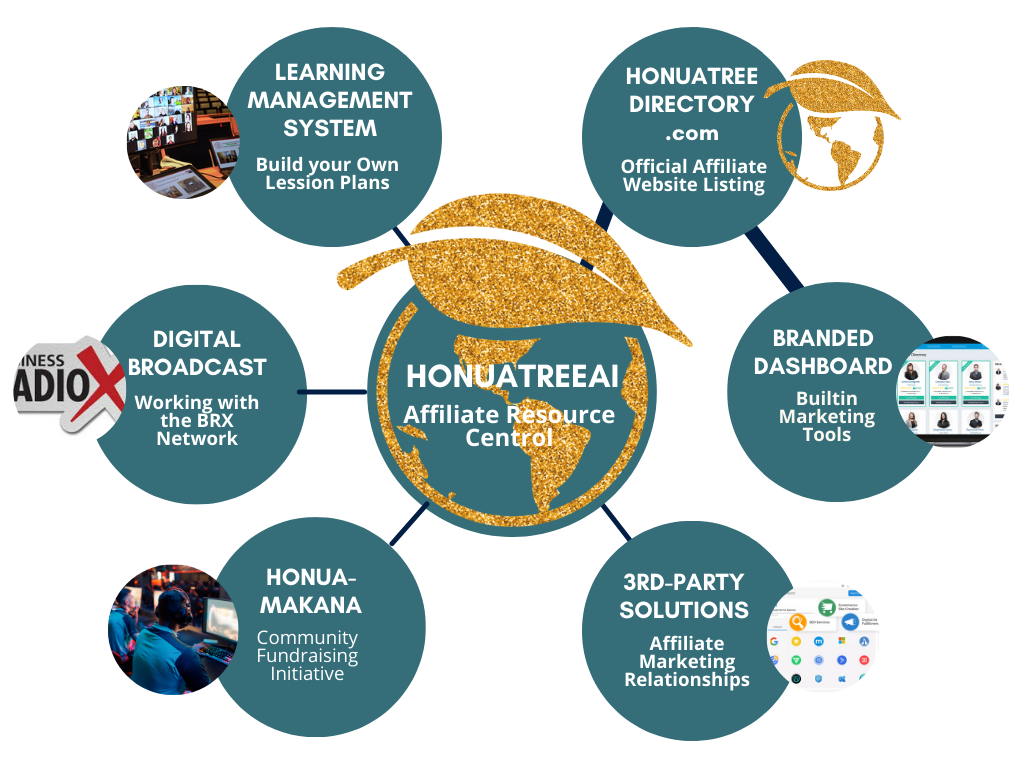
These lessons—earned through sweat, opportunity, hardship, and persistence—are why HonuaTree exists today. HonuaTree is more than a directory. More than software. More than a business platform.

It is the embodiment of a belief I’ve carried with me my entire life:

People can thrive when they have access to tools, knowledge, and a fair chance—no matter where they start.

I created HonuaTree so others wouldn’t have to struggle the way I did to find opportunity. So they could market their businesses, share their skills, teach their knowledge, and build their own legacies—without needing millions of dollars or insider connections.

HonuaTree is the tree I wish had existed for me when I was:

  • Standing in the cotton fields

  • Delivering newspapers

  • Washing dishes

  • Learning engineering in the 1970s

  • Building my first company

  • Navigating the early internet

It is my way of giving back—not through charity, but through empowerment.

1

Why My Story Matters Today

America is still a nation searching for fairness, opportunity, and connection. The challenges may look different, but the underlying struggle is the same as the one I lived through..

HonuaTree stands as a reminder that:

  • Hard work still matters.

  • Technology can still open doors.

  • Communities still need each other.

  • Economic empowerment is the foundation of dignity.

My journey—from Philadelphia to Corapeake to aerospace boardrooms to digital entrepreneurship—reflects the journey of countless Americans who were born with little but learned to build much.

And today, HonuaTree is my invitation to others to build with me.

Print Friendly, PDF & Email